After suddenly losing his hearing, and with no clear diagnosis, Matt Pinder was left with much uncertainty of what his future would look like. His story highlights the challenges of sudden hearing loss, the impact on mental health, and the barriers deaf people face when accessing healthcare.
A life filled with music
Tap, tap, tap… tinnitus. I was expecting it, as for over 20 years I had exposed my ears to loud sounds. To say music was a hobby is an understatement. Despite having no musical talent myself, if there was an opportunity to have music on, it was. I met my best friends at gigs, and I wrote about music and promoted new bands. Music consumed me.
When the sounds changed
The tapping in one ear started in mid-December 2022 then evolved, each night getting louder and louder until it turned into a whooshing and then a crashing noise. On Christmas Day, it started in the other ear – Boxing Day was the last time I had a conversation with my parents, and 30 December was the last time I could recognise a song.
I had already been to the doctors twice and received two different diagnoses ‒ bunged up sinuses and an infection. It did not seem serious enough for A&E, so in the New Year I went for a hearing test at Specsavers. The results came back, and I learned that my hearing had gone from perfect to profound in less than three weeks. I left Specsavers with an emergency referral for the Ear, Nose and Throat (ENT) clinic.
First glimpse of the impact
This was the first time I realised what the impact of my hearing loss was going to mean. I had already lost some independence, having to attend the appointment with my parents (I was 36), and I was barely acknowledged by the doctor.
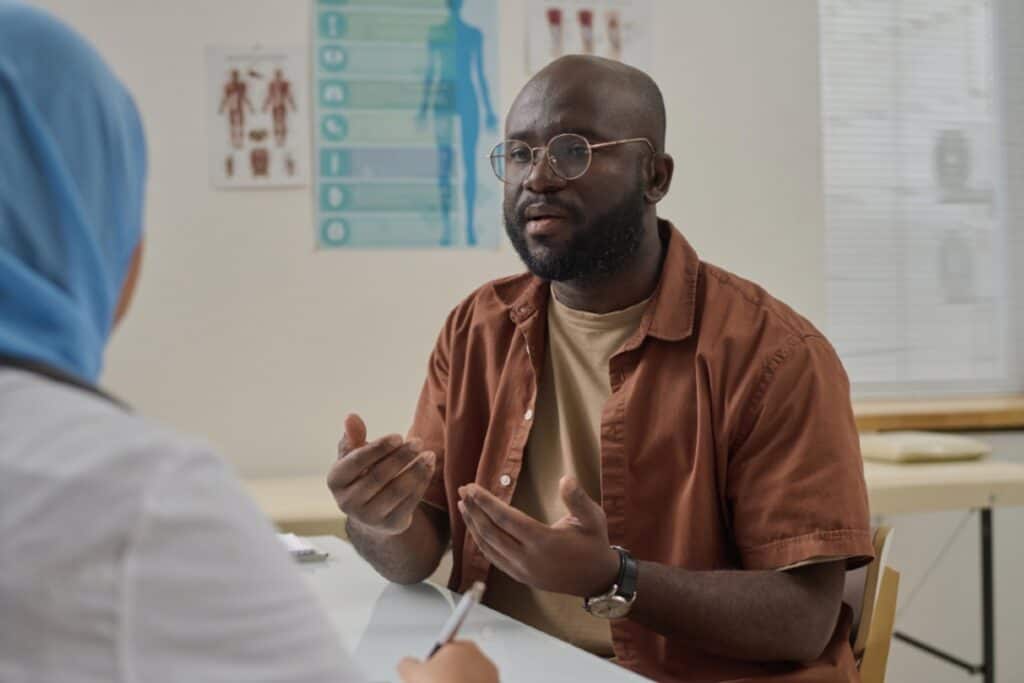
This was also the first time I experienced how health professionals communicate with deaf people, and unfortunately in my experience, they do not.
I sat there while the doctor spoke with my parents, then Googled something, and scribbled down on paper, ‘sudden deafness’ and ‘steroids’. The diagnoses of ‘sudden deafness’ was apparently “nothing to worry about”. I was told to take steroids for a week and then I’d be fixed – I was not.
A rare condition revealed
I was in and out of the hospital every other day in January, meeting doctors who specialised in hearing issues, but who did not know how to communicate with me. The tests had gotten more intense; the results were inconsistent and by the end of the month the ENT specialists were puzzled.
It was then they looked through my medical history to see that I had Leigh Syndrome, a rare neurological disorder that affects the central nervous system. Typically, Leigh Syndrome starts in infancy and those affected rarely reach their teens. Mine started when I was 12 and symptoms have slowly worsened.
The doctor passed me a note that said, ‘ear fine, brain-related’. I immediately knew what this meant: this situation was not temporary. I tried to avoid making eye contact with my parents as the doctor explained what I had just read and was trying to process. They knew what it meant too, so that was a tough time.
No clear diagnosis and no support
Even though the ENT clinic presumed my deafness was linked to my Leigh Syndrome, my consultant was baffled when he saw my MRI scan, so he referred me to see specialists in Newcastle. There are only a few adults in the UK with Leigh Syndrome, and I am the only one to suddenly lose their hearing.
A quick cry and that was it ‒ move on. I was referred back to my neurology consultant who had no experience or knowledge about deafness. I wondered, “am I even deaf?”. The tests say so, but I do not have an official diagnosis and have not been offered any support. When I asked my GP, he laughed and told me to, “go to a charity”.
Living in limbo
I have tried hearing aids and had tests for cochlear implants, but neither will help. Technically, I can hear. I can hear the noise the keys make when my fingers type, I can hear muffled voices, but I can also hear noises that are not really there. And I’m unable to enjoy music like before. It seems the part of my brain that processes words is broken and it cannot be fixed.
Anxiety and isolation
During that first year, I had anxiety just leaving the house in case someone tried to make small talk, and I would choose to shop where I knew there was a self-checkout to minimise awkward interactions. I have always loved the freedom of travelling solo, but at that time I couldn’t imagine that being possible – I couldn’t even order a coffee from a local café!
Without music I lost connection, but it was not the songs that I missed, it was the community and the opportunities that music brings. I still get jealous if people are going to a gig I would have gone to.
Finding independence again
It took me a while, but I rediscovered some independence 18 months after the initial ordeal. I wanted to travel again, so I eased my way in and visited friends in France. Then, after a successful first trip I flew to Berlin where my confidence grew even more. They didn’t make a fuss; they just made it easy.
I had my independence back, and I felt like I could do anything I wanted to do, even if I couldn’t hear.
I have had to adapt my life, but it is not as dramatic as I expected. Watching TV with subtitles is still annoying but it feels more normal now, and I have always planned everything before leaving the house anyway.
Now, instead of pointing and nodding when I pretend to hear, I just show people, “I am deaf”, typed into my phone. Most of the time they do not see me as an inconvenience – people just want to help.